













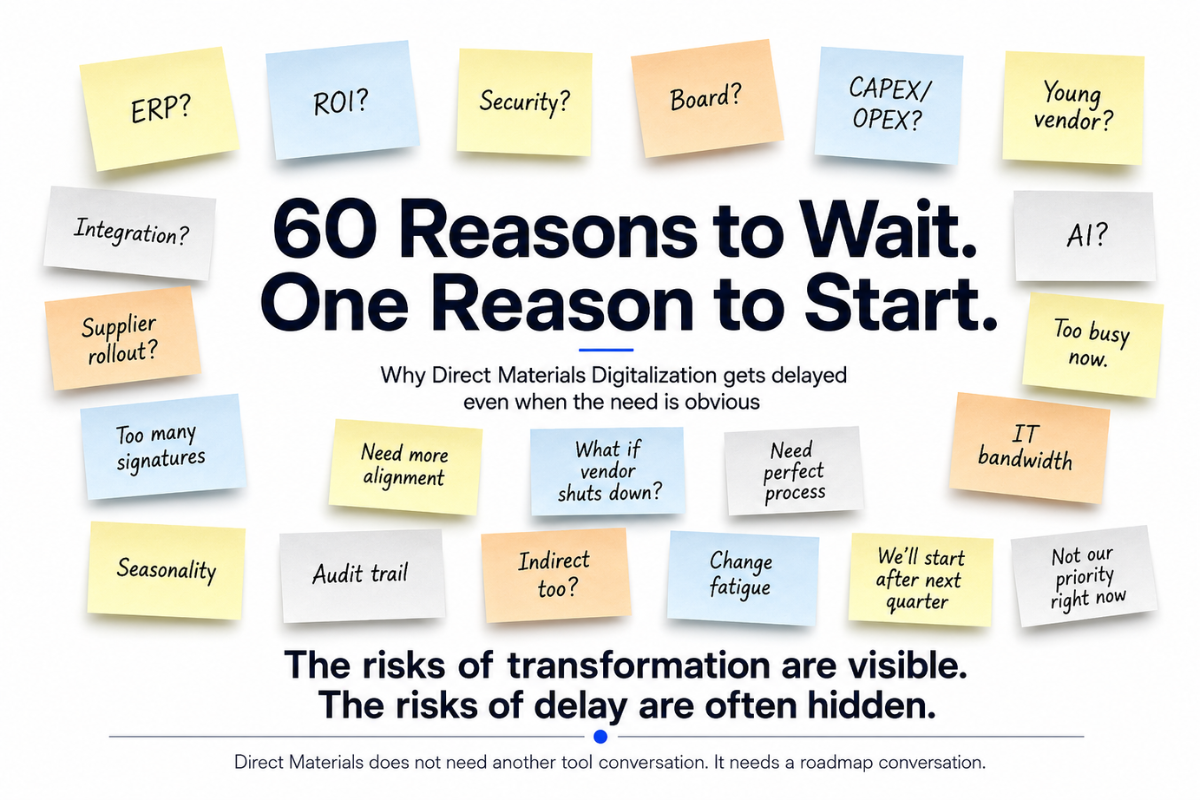
Why Direct Materials Digitalization Gets Delayed Even When the Need Is Obvious
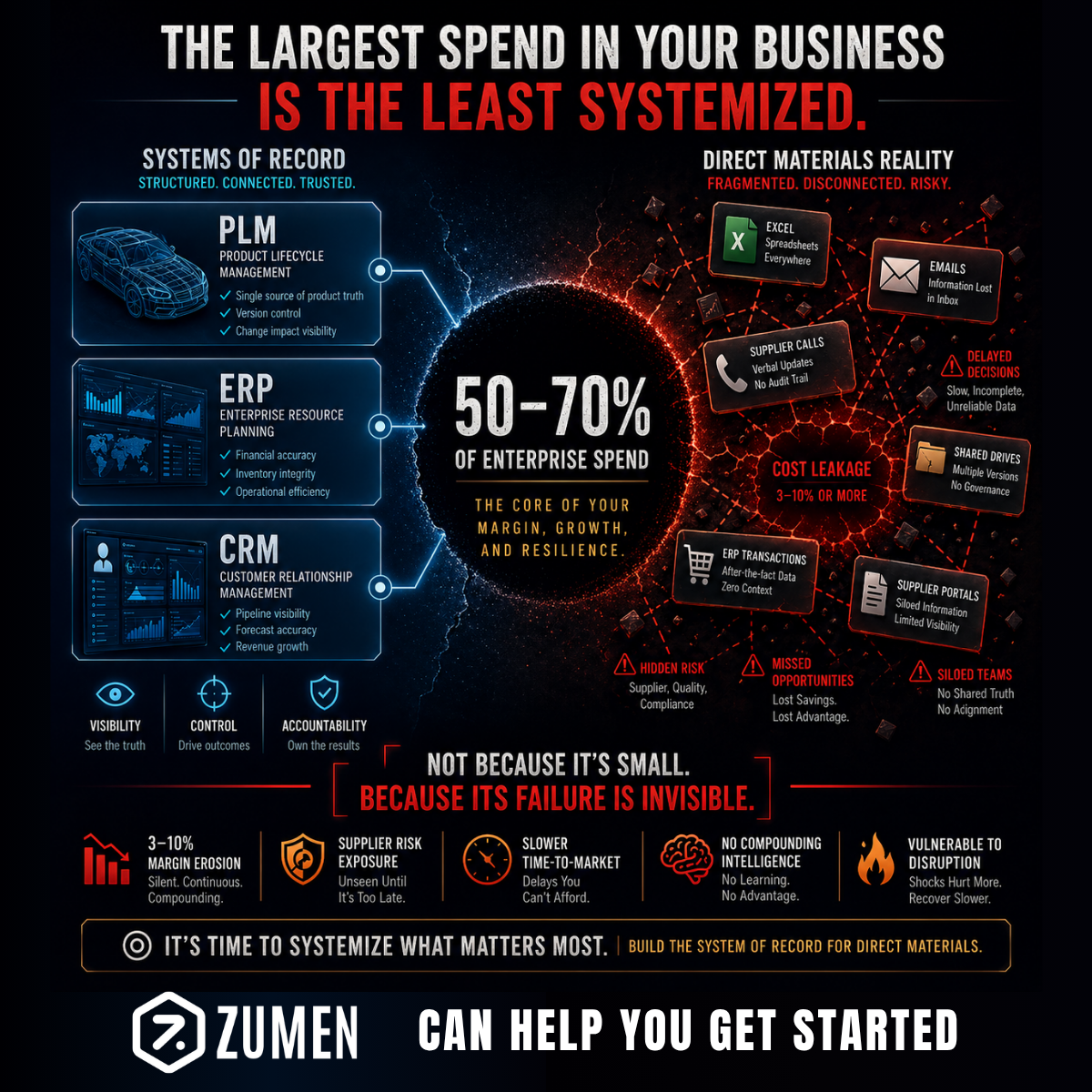
Most manufacturing leaders know that Direct Materials is too important to be managed through spreadsheets, emails, shared folders, supplier follow-ups, and tribal knowledge.
Direct Materials affects product cost, supplier performance, quality, delivery reliability, production continuity, working capital, customer experience, and profitability.
And yet, decisions on Direct Materials Digitalization move painfully slowly.
The delay is rarely because companies do not see the value. The delay happens because the decision becomes too large, too cross-functional, too security-sensitive, too process-heavy, too audit-conscious, and too easy to postpone.
What begins as a technology discussion quickly becomes an enterprise transformation discussion. That is where many companies freeze.
1. The first problem is not software. It is conviction.
One of the earliest risks is the lack of shared conviction between the CPO and the CIO.
The CPO may see sourcing delays, supplier follow-ups, cost-sheet chaos, quality documentation gaps, tooling visibility issues, and daily operational pain.
The CIO may see another enterprise application, another integration burden, another security review, another master data dependency, and another system that IT will eventually need to support.
Both perspectives are valid.
But unless the CPO and CIO first agree that Direct Materials needs its own operating layer, every discussion becomes a debate about symptoms.
! The business asks for better supplier collaboration. IT asks why ERP cannot handle it.
!! Procurement asks for cost governance. Finance asks for ROI. Security asks about IP exposure.
The conversation keeps moving in circles because the organization has not aligned on the fundamental question:
Is Direct Materials just another procurement process? Or is it a core manufacturing operating process that deserves its own system of record and execution?
2. ERP comfort is one of the biggest blockers
The most common objection is simple: Why can’t ERP handle this?
ERP is essential. No serious manufacturing company can run without it.
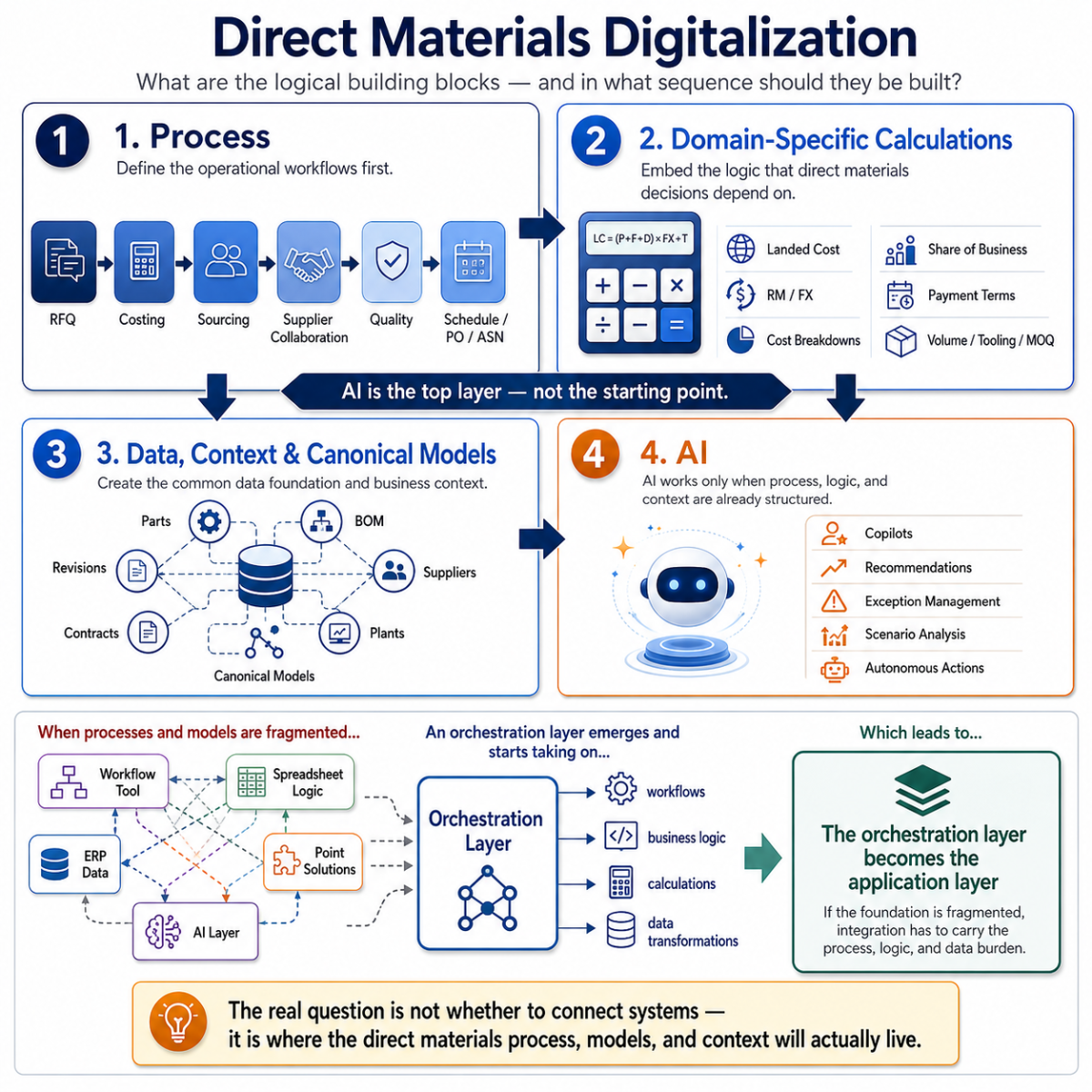
But ERP is strongest at recording transactions. Direct Materials digitalization is about governing the decision lifecycle that creates those transactions.
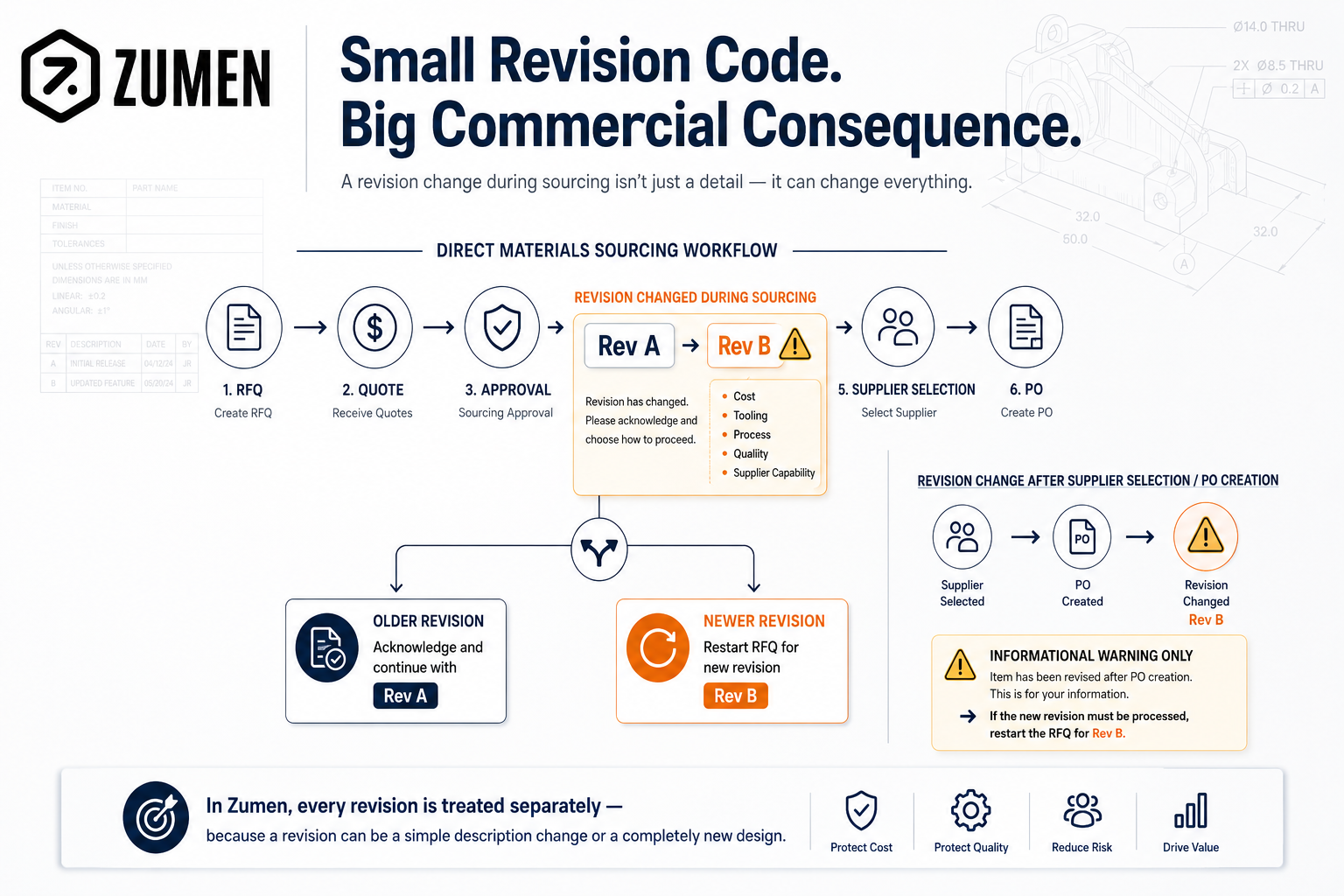
Before a purchase order is released, a lot has already happened: supplier selection, RFQs, quotation collection, technical discussions, cost breakdowns, negotiation, approvals, tooling decisions, quality requirements, engineering context, price revisions, and supplier commitments.
Much of this does not live cleanly inside ERP today.
The right question is not: Can ERP record the purchase order?
The better question is: Can ERP govern the full decision lifecycle before the purchase order?
That distinction matters. Because if the transaction is recorded but the decision remains scattered across spreadsheets, emails, and buyer laptops, the company still does not have a Direct Materials operating layer. And it is not just the decision. It is also the capability to fetch those backup information, spreadsheet calculations, assumptions and agreements later in the lifecycle, when the product has already hit mass production – the challenges in this stage are not well articulated and understood by the ERP team.
3. The initiative suddenly starts looking very big
Many Direct Materials digitalization initiatives begin modestly.
A company may think it is evaluating a sourcing tool, supplier portal, costing module, or procurement automation layer.
But as the discussion progresses, the scope expands. It starts touching procurement, supply chain, supplier quality, engineering, finance, IT, ERP, BOMs, drawings, costing, master data, supplier collaboration, approvals, integrations, access control, change management, and executive governance.
Suddenly, everyone realizes this is not a small tool rollout.
It starts looking as large and consequential as an ERP or CRM implementation.
That realization freezes people.
The issue is no longer whether the company needs the platform.
The issue becomes:
- Who will own this?
- Who will sponsor it?
- Who will defend the budget?
- Who will manage the change?
- Who will take it to the CEO or board?
- Who will stay with it for multiple years?
This is where many initiatives slow down, not because the need is unclear, but because the size of the commitment becomes visible.
4. The common reasons companies delay the decision
When you look closely, the delay usually comes from a combination of risks.
Here are the common ones.
4.1. Strategic conviction risks
1. CPO and CIO do not share enough conviction.
2. IT still believes ERP should solve this problem.
3. Direct Materials gets mistaken for regular procurement.
4. ERP comfort hides the decision lifecycle gap.
4.2. Transformation-scale risks
5. The initiative starts looking like ERP or CRM.
6. Leaders fear starting a multi-year transformation.
7. The full platform scope overwhelms decision makers.
8. The first step carries the final vision’s burden.
9. Nobody wants to own the entire transformation.
10. CEOs worry about disrupting regular manufacturing operations.
11. The project stays hidden until board approval appears.
12. The board narrative gets rebuilt after months of work.
13. Champions fear owning work beyond their career horizon.
4.3. Governance and approval risks
14. Too many signatures are needed for budget approval.
15. CAPEX versus OPEX debates slow the decision.
16. Vendor selection becomes an audit-defense exercise.
17. Defensibility overtakes the real business need.
18. Vendor ROI is not trusted enough internally.
19. The company does not build its own ROI.
4.4. Platform-scope risks
20. The problem is defined too narrowly.
21. Teams use solution mindset, not platform mindset.
22. Indirect procurement gets added into the discussion.
23. Generic S2P comparisons confuse the evaluation.
24. Supplier portals are mistaken for collaboration platforms.
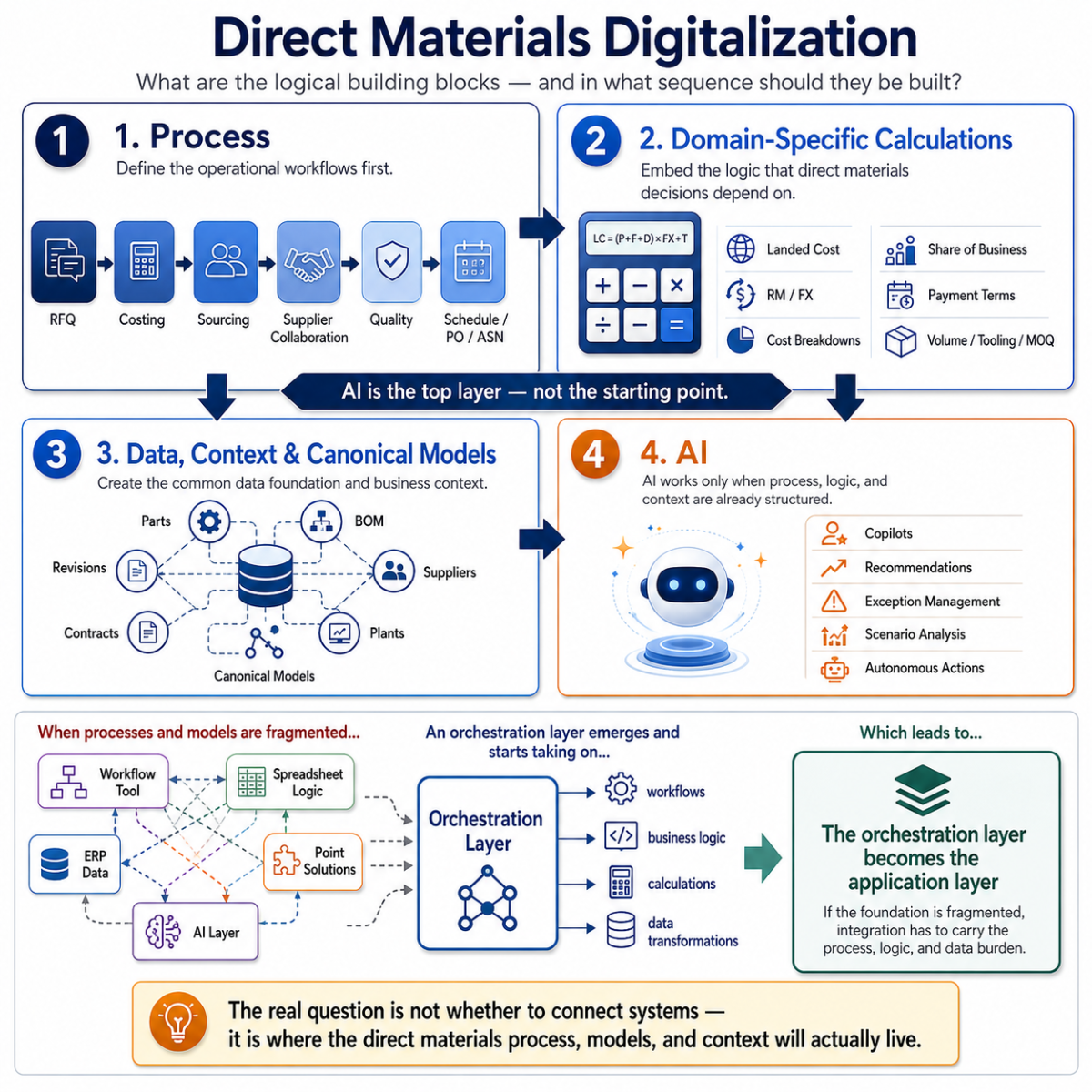
25. Orchestration layers quietly become application layers.
26. The first vendor becomes the mental benchmark.
4.5. Roadmap-formation risks
27. Roadmaps are built before understanding modern platforms.
28. Vendor discovery is delayed while strategy is perfected.
29. Teams struggle to choose a practical starting point.
30. Teams try solving the full future state first.
4.6. Process and customization risks
31. Every company believes its process is unique.
32. Every existing step is treated as sacred.
33. Users want every exception captured exactly.
34. SaaS adoption becomes custom software development.
35. Product-versus-custom balance becomes hard to accept.
36. Process reengineering starts during vendor closure.
37. Vendor closure gets delayed by process debates.
38. Supplier-facing perfection delays the first rollout.
4.7. Data and context risks
39. Historic cost sheets sit inside buyer laptops.
40. Cost intelligence remains trapped in spreadsheets.
41. Important context lives in emails and files.
42. Direct Materials lacks a canonical data model.
43. Cost calculations continue outside the platform.
4.8. Security and integration risks
44. IP spillage fear derails the discussion.
45. SaaS security risk is often overestimated.
46. Current Excel-email risk is often underestimated.
47. Private cloud and access controls are overlooked.
48. ERP integration fear creates endless technical debates.
4.9. Vendor-confidence risks
49. Young SaaS vendor risk delays commitment.
50. Vendor age becomes a proxy for safety.
51. Teams worry about vendor continuity.
52. Fallback plans are not evaluated properly.
4.10. Commercial dependency risks
53. Scope expansion creates long-term cost anxiety.
54. Teams fear price increases after dependency grows.
55. Platform reliance creates vendor lock-in concerns.
56. Management may challenge scope-driven cost increases.
4.11. AI and future-readiness risks
57. Companies wonder what AI will change later.
58. They wait for AI clarity before starting.
4.12. Bandwidth and timing risks
59. IT lacks bandwidth after ERP and CRM fatigue.
60. Functional teams never find a normal time.
5. The pattern is clear
These reasons may look different on the surface.
- Some are technical.
- Some are financial.
- Some are organizational.
- Some are emotional.
- Some are political.
But they all create the same outcome:
The company keeps postponing the decision.
- Nobody says Direct Materials digitalization is unnecessary.
- Nobody says spreadsheets are the right long-term answer.
- Nobody says supplier collaboration should remain fragmented.
- Nobody says cost intelligence should sit inside individual buyer laptops.
- Nobody says AI readiness can happen without clean data, context, and process.
And yet, the decision does not move.
This is the real problem.
The organization is not rejecting the transformation.
It is slowly drowning in reasons to delay it.
6. Waiting does not reduce the risk
The uncomfortable truth is that most of these risks do not disappear by waiting.
ERP will still not capture the full decision lifecycle.
Cost sheets will continue to multiply.
Supplier communication will remain scattered.
Context will keep leaking into emails.
Buyers will continue carrying institutional memory.
Cost calculations will remain outside the system.
IP will continue moving through uncontrolled channels.
AI readiness will remain theoretical.
IT and functional teams will remain busy.
There may never be a calm season.
Waiting may feel safe because it avoids an immediate transformation decision.
But waiting also strengthens the very risks the company is trying to avoid.
7. The answer is not a big-bang transformation
The answer is not to force the company into a massive multi-year program on day one.
That is exactly what scares people.
The better approach is to acknowledge the full roadmap, but start with a bounded, high-value use case.
Start where the pain is clear.
Start where adoption is realistic.
Start where the current manual process creates measurable risk.
Start where business value can be demonstrated without asking the organization to absorb the entire transformation at once.
That starting point may be sourcing.
It may be cost governance.
It may be supplier collaboration.
It may be tooling.
It may be quality documentation.
It may be schedules.
The starting point can vary by company.
But the principle should not change:
Start small enough to move.
Design large enough to matter.
8. The real leadership question
Direct Materials does not need another tool conversation.
It needs a roadmap conversation.
But that roadmap should not become an excuse for paralysis.
The companies that move ahead will be the ones that understand the risks, mitigate them thoughtfully, and still find the courage to begin.
Because in Direct Materials, the biggest risk may no longer be choosing the wrong platform.
The bigger risk may be waiting too long to build the operating layer the business already needs.